



Moving to Germany is exciting, but the first few weeks can also feel surprisingly bureaucratic. When we settled in Düsseldorf, there were a handful of things we needed to sort out almost immediately.
From registering our address to opening a bank account and making sure our names were on the mailbox, these small administrative steps made everyday life much easier.
If you have just moved to Germany, here are five of the most important things to take care of first.
1. Register Your Address in Germany — Anmeldung
One of the first administrative tasks after moving to Germany is registering your new address. This process is called Anmeldung.
In Düsseldorf, your residence should generally be registered within two weeks of moving in.
You can register in person at one of Düsseldorf’s Bürgerbüros. An appointment is required for an in-person visit. Düsseldorf also offers an online registration service for eligible residents.
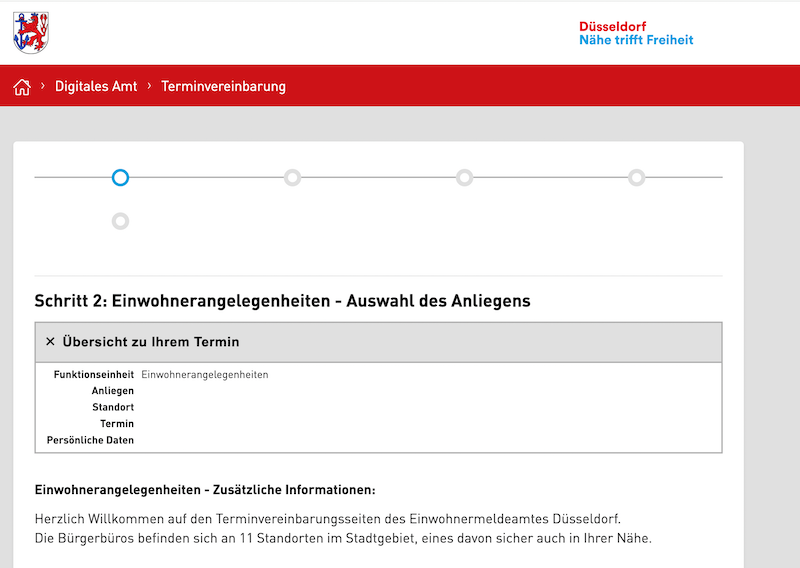
What you normally need for Anmeldung
You will usually need:
- A valid passport or official photo ID
- A Wohnungsgeberbestätigung, which is the confirmation of your move-in provided by your landlord, property manager or main tenant
- Additional documents if they are relevant to your personal situation
A rental contract alone is not a substitute for the Wohnungsgeberbestätigung.
After your registration is completed, you receive a Meldebestätigung, confirming that your address has been registered.
Why Anmeldung matters
Your registered address becomes important for many parts of everyday life in Germany.
Banks, insurance providers, government offices and other service providers may ask for proof of your registered address, so completing your Anmeldung early can make the rest of your setup much easier.
If you move again later, remember that you will normally need to register the new address as well.
2. Update Your Address With the Turkish Authorities
If you are a Turkish citizen living abroad, there is another important administrative step: updating your overseas address with the Turkish authorities.
Turkish citizens are required to report a change of address abroad within 20 working days.
This is important not only for keeping your official records accurate, but also for issues such as official correspondence, social security records and overseas voter registration.
Depending on the consulate and the service required, procedures can vary, so it is best to check the current instructions of the Turkish consulate responsible for your area before visiting.
You can also check your registered address through Turkish e-government services.
3. Open a German Bank Account
Once the basic registration paperwork is underway, opening a German bank account makes daily life considerably easier.
Many recurring payments in Germany are handled through a bank account using your IBAN, including things such as:
- Rent
- Electricity
- Internet contracts
- Insurance
- Mobile phone contracts
- Other recurring payments
When we moved to Düsseldorf, we chose Commerzbank. Traditional banks such as Commerzbank and Sparkasse are common options, although there are now many online banks available as well.
Depending on the bank, you may be asked for identification, proof of address and other documentation.
Expect important letters
German banks may send important information separately by post, including:
- Bank cards
- PIN numbers
- Online banking activation details
- Security information
So during your first few weeks in Germany, checking your mailbox regularly is more important than you might expect.
4. Get a German Mobile Phone Number
A German phone number quickly becomes useful after relocating.
You may need it when dealing with:
- Government offices
- Banks
- Delivery companies
- Landlords
- Insurance providers
- Utility companies
We initially used a prepaid Vodafone SIM before later moving to a regular mobile contract.
Starting with prepaid can be a practical option because it gives you time to compare mobile providers before committing to a longer contract.
Before choosing a plan, compare network coverage, contract duration, data allowance and cancellation conditions.
5. Put Your Name on Your Mailbox
This sounds like a very small detail, but it is surprisingly important in Germany.
Put your surname clearly on your mailbox as soon as possible.
During your first weeks after moving, you may receive important letters from banks, authorities, insurance providers and other institutions.
If the postal carrier cannot identify your name on the mailbox, your mail may be delayed or returned.
This is particularly important if you are temporarily staying in a furnished apartment, sublet or Airbnb-style accommodation while completing your initial registration.
A Few More Things Worth Knowing
Moving to another address
If you move again within Germany, you will generally need to register your new residence.
Turkish citizens should also remember to update their overseas address registration when their address changes.
Direct debit is extremely common
Many recurring payments in Germany are collected automatically from your bank account using SEPA direct debit.
Keeping an eye on your account during the first few months is a good habit, especially while several new contracts are being activated.
Keep some cash with you
Card payments are now widespread in Germany, but there are still smaller shops, cafés and restaurants that prefer cash or accept only certain types of cards.
Having some cash available can still be useful.
Final Thoughts
The first few weeks after moving to Germany can involve a surprising amount of paperwork, but taking care of the essentials early makes everything else much easier.
Start with your Anmeldung, make sure your official address records are correct, set up your bank account and phone number, and do not forget something as simple as putting your name on the mailbox.
Once these basics are sorted, you can finally spend a little less time dealing with bureaucracy — and a little more time enjoying your new life in Germany.
If you also need to transfer funds back home or move savings across borders, check our complete guide on the best and cheapest ways to send money from Germany to Turkey.
If you plan to drive in Germany, remember that foreign non-EU driving licences are only valid for six months; read our step-by-step guide on how to convert a Turkish driving licence in Germany.
For a detailed breakdown of how to prepare your rental application and navigate credit checks as a newcomer, read our guide on how to rent an apartment in Germany without SCHUFA.
For a detailed breakdown of choosing between a traditional primary bank and a free digital second account, read our guide to opening a bank account in Germany as a newcomer.
If you are settling into a new place and looking to save on home renovation and trade costs, read our practical guide on DIY apartment painting in Germany.