


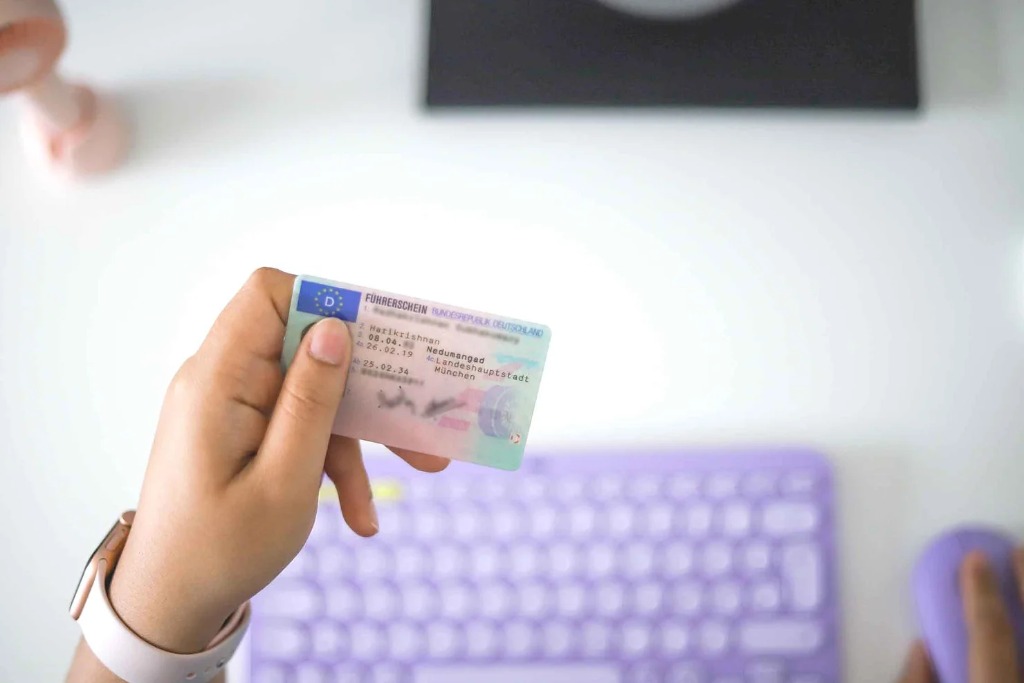
When I started converting my Turkish driving licence in Düsseldorf in 2020, I quickly realised that having years of driving experience did not mean I could simply exchange my licence for a German one.
Turkey is treated as a non-EU/non-EEA country for German driving-licence rules, and the conversion process includes several administrative steps as well as theory and practical examinations.
My own application began in 2020, so some details of my experience — especially prices and Covid-era procedures — are now outdated.
This guide keeps the parts of that experience that are still useful, but updates the process with the current 2026 rules.
Last updated: October 2026
Important: This guide focuses on a standard Turkish Class B driving licence and my experience in Düsseldorf, NRW. Requirements can differ by driving-licence category and local authority. Always confirm the final document list with the Fahrerlaubnisbehörde responsible for your address.
1. How Long Is a Turkish Driving Licence Valid in Germany?
If you hold a valid driving licence from Turkey (or another non-EU/non-EEA nation), you are generally permitted to drive motor vehicles in Germany for exactly six months from the date you establish your normal, ordinary residence (ordentlicher Wohnsitz) in Germany.
It is important to understand that under German law (§ 29 of the Fahrerlaubnis-Verordnung – FeV), this six-month clock begins when you establish your legal residence in Germany — typically marked by your municipal address registration (Anmeldung) — rather than a casual border crossing.
Once those six months expire:
- Your Turkish driving licence is no longer recognised for driving in Germany.
- Continuing to drive on public roads after the six-month cutoff constitutes driving without a licence (Fahren ohne Fahrerlaubnis under § 21 StVG). This is a serious criminal offence in Germany that can result in heavy fines, penalty points, or even imprisonment, and invalidates your car insurance coverage.
The 12-Month Temporary Stay Exception: If you can substantiate to your local driving licence authority (Fahrerlaubnisbehörde) that you will reside in Germany for no more than 12 months in total (for example, on a fixed-term study or research assignment), you can apply for an extension of your foreign licence’s validity up to a maximum total of 12 months. However, this extension must be applied for and officially granted before your initial six-month period lapses.
2. Do You Have to Convert a Turkish Driving Licence?
If you plan to live in Germany permanently or stay for longer than six months and want to continue driving, converting your Turkish driving licence into a German driving licence (Umschreibung einer ausländischen Fahrerlaubnis) is mandatory.
Many newcomers wonder whether Turkey has a mutual licence exchange treaty with Germany. Germany maintains a reciprocal list of states under Anlage 11 FeV (such as Switzerland, the United Kingdom, Australia, and select US states) where foreign licences can be exchanged directly with minimal or no testing. However, Turkey is not an Anlage 11 country for passenger car licences (Class B).
Consequently, you cannot simply hand in your Turkish licence at the local city office and receive a German one in return. You must complete the formal conversion procedure governed by § 31 FeV.
3. Do Turkish Licence Holders Need Theory and Practical Tests?
The short answer is yes, you must pass both the theoretical exam and the practical driving exam.
However, there is a very significant legal advantage that makes converting a licence vastly different from starting from scratch as a beginner:
- No Mandatory Theory Classes: As a conversion applicant, you are exempt from attending mandatory classroom theory lessons (Theorieunterricht) at a driving school. You can study independently using approved apps.
- No Mandatory Special Driving Lessons (Sonderfahrten): First-time German learner drivers must complete a strict curriculum of special driving hours (including 5 hours on country roads, 4 hours on the Autobahn, and 3 hours at night). Conversion applicants are exempt from all statutory minimum driving lessons.
Correction of an outdated myth: You will sometimes read in online expat forums that “at least four driving lessons are mandatory by law.” This is completely false. German federal regulations set no minimum number of driving lessons for an Anlage-11-exempt conversion. You only take the number of practical hours that you and your driving instructor deem necessary to safely master German examination standards.
Step 1: Register with a Driving School (Fahrschule)
Even though you do not have to sit through hours of classroom instruction, you still need to register with an accredited German driving school (Fahrschule).
Why is a driving school necessary if you already know how to drive?
- The Practical Exam Vehicle: By law, the practical driving exam must be conducted in a registered dual-control test vehicle (with auxiliary pedals on the passenger side) accompanied by a licensed driving instructor.
- Administrative Presentation: The driving school submits your formal exam readiness (Vorstellung zur Prüfung) to the examination body (TÜV or DEKRA).
- Exam Route Familiarisation: Driving around the local test area with an experienced instructor helps you identify tricky local intersections, speed traps, and specific examiner expectations.
When choosing a school, ask upfront if they have experience with Umschreibung applicants. Some driving schools welcome experienced foreign drivers and offer streamlined conversion packages, whereas others may attempt to treat you like an 18-year-old first-time learner. In my experience in Düsseldorf, finding an instructor who was candid about what examiners specifically look for saved me considerable time and stress.
Step 2: Translation and Licence Classification
Before submitting your application to the municipal authority, your Turkish driving licence must be accompanied by an accepted German translation.
When I applied in Düsseldorf in 2020, I first obtained a sworn translation and then obtained an ADAC classification document. Today, the process is more nuanced:
- Each local Fahrerlaubnisbehörde sets its own exact requirements for accepted translators.
- In Düsseldorf, the Straßenverkehrsamt Düsseldorf accepts translations prepared by court-sworn translators (vereidigte Dolmetscher/Übersetzer) in Germany or an internationally recognized automobile club such as ADAC.
- ADAC offers a comprehensive translation and classification service (Führerschein-Übersetzung und Klassifizierung) through its regional branches or online portal.
Tip: Check directly with your local authority whether a certified sworn translation alone is sufficient, or whether they explicitly require an ADAC classification certificate for your specific licence category.
Step 3: First Aid Course and Vision Test
To convert a non-Anlage-11 foreign licence, German federal law requires you to prove basic life-saving training and adequate eyesight:
First Aid Course (Erste Hilfe)
You must complete an official first-aid training course (Schulung in Erster Hilfe pursuant to § 19 FeV) consisting of 9 teaching units (Unterrichtseinheiten) of 45 minutes each. These courses are offered across every German city by certified humanitarian and private training providers (such as the German Red Cross – DRK, Johanniter, Malteser, or private centres like Erste Hilfe Kurs providers).
The course takes roughly 7.5 hours and covers resuscitation, wound dressing, recovery positions, and emergency scene safety. In 2020, I completed my training with Auxiliaris in Düsseldorf. Providers and fees have evolved since then; courses currently range from €40 to €60, and many centres offer bilingual instruction in English or German.
Vision Test (Sehtest)
For Class B, you need an official eye test certificate (Sehtestbescheinigung pursuant to § 12 FeV) issued by an optometrist, optician, or certified testing centre, which must not be older than two years at the time of application.
A personal lesson from my 2020 test: Many first-aid training centres offer an on-site vision test on the same day. During my course, I took the test on-site and unexpectedly failed it! I had been driving for years in Turkey without realising that my eyesight had slightly deteriorated. I had to visit a local optician in Düsseldorf, get prescription glasses, and re-take the vision test with corrective lenses. When your licence is eventually issued, it will bear the EU restriction code 01 (meaning you are legally required to wear glasses or contact lenses while driving).
Step 4: Submit Your Application at the Fahrerlaubnisbehörde
Once you have gathered your documents and chosen your driving school, you must submit your application in person to your local driving licence office.
In Düsseldorf, the responsible authority is:
Straßenverkehrsamt Düsseldorf (Fahrerlaubnisbehörde)
Address: Höherweg 101, 40233 Düsseldorf
Appointment: Personal appearance strictly by prior online appointment via the Düsseldorf Serviceportal.
Current Authority Fee: €37.50 to €45.10 (depending on administrative verification; strictly cashless payment via Girocard/EC, credit card, Apple Pay, or Google Pay).
Average Processing Time: Currently around 12 weeks.
Do not wait until your 5th month in Germany to book this appointment! Because the authority in Düsseldorf currently averages around 12 weeks to process the file and forward test authorisation to TÜV Rheinland, waiting too long means your six-month driving permission will lapse long before you are allowed to sit your exams.
Documents Needed to Convert a Turkish Driving Licence in Germany
Here is your essential checklist for the conversion application (based on current official requirements for Class B in Düsseldorf):
- Valid Passport or National ID card (along with your German residence permit / Aufenthaltstitel if applicable).
- Original Turkish Driving Licence (must be valid at the time of application).
- Accepted German Translation of the driving licence (by a court-sworn translator or recognized automobile club like ADAC).
- Proof of First Aid Training (Erste-Hilfe-Kurs, 9 units).
- Official Eye Test Certificate (Sehtestbescheinigung, not older than 2 years).
- One Current Biometric Passport Photo (35mm x 45mm, frontal view).
- Confirmation of Driving School Registration (name and registration details of your Fahrschule in the local test district).
- Certificate of Registration (Meldebescheinigung) or confirmation proving the date you established legal residence in Germany.
Step 5: The Theory Test (Available in Turkish)
Once the Fahrerlaubnisbehörde approves your file, they send your test order to the regional testing organisation (TÜV Rheinland in North Rhine-Westphalia). You can then schedule your theory exam through your driving school.
Good to know: The German driving theory examination is officially available in Turkish (as well as English, German, French, and 8 other languages). You can choose Turkish directly on the computer testing terminal.
Current 2026 Class B Theory Exam Structure
- 30 Multiple-Choice Questions: Displayed on a touch-screen computer terminal, including static diagrams, animated driving scenarios, and short video clips.
- Points System: Each question carries a point value between 2 and 5 points depending on safety importance.
- Passing Standard: You are allowed a maximum of 10 error points to pass.
- Critical Exception: If you answer two 5-point questions incorrectly, you fail immediately, even if your total error score is exactly 10 points.
- Official Exam Fee: The official TÜV fee for the Class B theory test under Germany’s nationwide fee schedule (GebOSt) is currently €24.99 (inclusive of 19% VAT).
How to prepare: In 2020, I studied using an app called Fahrschulcard in Turkish. Today, driving schools provide access to contemporary certified digital learning apps (such as Fahren Lernen Max or Fahrschulcard). Solve every question in the official question pool until you achieve consistent 100% scores in simulated mock exams.
Step 6: Practical Driving Lessons
Once you pass your theory test, your driving school can schedule your practical driving test. But before stepping into the exam car with an examiner, taking a few practice lessons with your instructor is crucial.
Even though I had driven in Turkey for years, driving in Germany required unlearning certain habits and mastering strict procedural routines that German examiners scrutinise:
- The Shoulder Check (Schulterblick): In Germany, failing to physically turn your head to check blind spots before changing lanes, turning, or crossing cycle paths is an instant fail. Looking in the mirror is not enough.
- Right Before Left (Rechts vor Links): In residential zones without priority signs (yellow diamond), vehicles approaching from your right always have priority, even at tiny, quiet junctions.
- Bicycle Priority (Radfahrer): Cyclists are everywhere in German cities. When turning right across a bike lane, you must stop and yield to cyclists riding straight ahead.
- 30 km/h Zones: Residential areas strictly enforce 30 km/h speed limits. Driving at 35 km/h can result in failure.
- Strict Lane Positioning and Sign Recognition: Observing one-way street exceptions, environmental zones, and parking regulations.
Depending on your confidence and adaptability, taking between 3 to 6 practical driving lessons is typically sufficient for an experienced driver to pass comfortably on the first attempt.
Step 7: The Practical Driving Test
The practical driving examination for Class B is governed by federal standards under the FeV:
- Test Duration: The total examination duration is 55 minutes. At least 30 minutes must be pure driving time on public roads (urban traffic, country roads, and usually a stretch of Autobahn). The remaining time covers pre-drive vehicle safety checks (tires, lights, hazard flashers) and the examiner’s debriefing.
- Official TÜV Exam Fee: The official testing organisation fee for Class B under the GebOSt is €129.83 (inclusive of 19% VAT). Your driving school will also charge a separate presentation fee for providing the car and instructor.
Language of the Practical Test: German Only
The practical driving test is conducted exclusively in German. You cannot request the examiner to conduct the test in English or Turkish, and freelance translators are not allowed in the test vehicle.
When I took my test in 2020, I politely explained to the examiner before starting that my German was limited. The examiner was understanding and used clear, concise driving commands. You do not need fluent German, but you must know the essential driving instructions by heart:
- Rechts / links abbiegen — Turn right / left
- Geradeaus weiterfahren — Continue straight ahead
- Nächste Straße rechts / links — Next street right / left
- Nächste Möglichkeit rechts / links — At the next legal opportunity, turn right / left
- Umkehren — Turn the vehicle around safely (three-point turn or driveway)
- Rückwärts einparken — Reverse parallel park
- Gefahrbremsung / Vollbremsung — Emergency stop (braking hard to a complete stop on command)
- Auf die Autobahn auffahren — Enter the motorway / Autobahn
Step 8: Receiving Your German Driving Licence
When you pass the practical test, the examiner either presents you with a test pass certificate (Prüfungsbescheinigung) or you receive an appointment to collect your EU credit-card-style driving licence from the Fahrerlaubnisbehörde.
Surrendering Your Turkish Licence: Under German administrative practice, driving licence holders may generally hold only one primary national driving licence within the EU. In most cities, including Düsseldorf, you must surrender your physical Turkish driving licence when receiving your German licence. The German authority retains the foreign licence on file or returns it via official diplomatic channels.
Crucial advice: Before you hand over your Turkish licence, make high-resolution digital scans and colour photocopies of both the front and back for your personal records.
When your new German driving licence arrives, inspect the reverse side:
- Verify that your entitlements for Class B (as well as mopeds/tractors AM and L) are correctly marked with effective dates.
- Check any numerical condition codes on line 12 (such as code 01 for eyeglasses or contact lenses).
How Much Does It Cost to Convert a Turkish Driving Licence in Germany?
Because you do not have to pay for mandatory theory classes or statutory minimum special driving hours, converting a licence is considerably cheaper than obtaining a German licence from scratch (which routinely exceeds €2,800 to €3,800 in 2026).
Here is a realistic overview of estimated expenses (current as of October 2026):
| Expense Item | Approximate Cost (2026) | Notes |
|---|---|---|
| Düsseldorf Authority Application Fee | €37.50 – €45.10 | Official administrative fee (cashless payment at Höherweg) |
| Sworn Translation / ADAC Classification | €30.00 – €65.00 | Depending on translator or ADAC membership |
| First Aid Course (9 units) | €40.00 – €60.00 | Mandatory 1-day course (DRK, Malteser, private centres) |
| Official Eye Test (Sehtest) | €7.00 – €15.00 | Available at opticians or course centres |
| Biometric Passport Photos | €10.00 – €15.00 | Set of 4 standard biometric photos |
| Driving School Registration Fee | €100.00 – €250.00 | Administrative registration for conversion applicants |
| Theory Learning App Access | €40.00 – €80.00 | Digital learning software with Turkish question bank |
| Official TÜV Theory Exam Fee | €24.99 | Fixed statutory fee under GebOSt (incl. VAT) |
| Practical Driving Lessons (e.g. 3–5 lessons) | €240.00 – €475.00 | Roughly €75 to €95 per 45-minute practice session |
| Fahrschule Practical Exam Presentation | €150.00 – €250.00 | Driving school vehicle provision and instructor attendance |
| Official TÜV Practical Exam Fee | €129.83 | Fixed statutory fee under GebOSt (incl. VAT) |
| Estimated Total Cost | €780 – €1,400 | Varies depending on lesson count and regional driving school rates |
What Surprised Me Most
Reflecting on my own conversion experience in Düsseldorf, several aspects genuinely caught me off guard:
- Driving experience is not an automatic pass: In Turkey, traffic flow often relies on informal visual communication and quick reactions. In Germany, examiners do not care how confident you feel behind the wheel; they judge whether you execute textbook safety procedures precisely.
- The strictness of the Schulterblick: Forgetting a single shoulder check when crossing a bicycle lane is an immediate disqualification. Developing that muscle memory took conscious practice.
- Discovering vision changes: Failing the simple eye test on my first-aid course was a total surprise. Had I not gone through the German conversion process, I might have driven for years without correcting my vision.
- Examiners are fair if you show preparation: Even with basic German, the examiner appreciated that I had memorised the test commands and respected the rules. Passing on the first try gave me tremendous confidence driving across Europe.
Common Mistakes to Avoid
- Waiting until the 5th or 6th month: With average processing times of 12 weeks at the authority, you must start in your first or second month in Germany to avoid an interruption in your legal driving status.
- Assuming an automatic swap: Turkey is not an Anlage 11 country; you must prepare for both exams.
- Believing driving lessons are legally mandatory: While highly recommended for test readiness, you are legally exempt from mandatory minimum hours. Do not let an aggressive driving school overcharge you for unnecessary packages.
- Skipping theory study: Even experienced drivers fail the theory exam if they do not study. Speed formulas, trailer weights, and German right-of-way rules require dedicated memorisation.
- Relying on old Covid information: Old 1-year emergency rules have long expired. The legal limit is strictly six months.
- Not learning German driving vocabulary: The practical test is conducted exclusively in German. Practice test directions beforehand.
If you recently moved to Germany and are navigating your initial administrative steps, read our companion guide on 5 essential things to do after moving to Germany or browse our Lifestyle guides.
Frequently Asked Questions
Is a Turkish driving licence valid in Germany?
Yes, but only for a limited period. A valid Turkish driving licence is officially recognized for driving in Germany for up to six months after establishing your normal legal residence.
How long can I drive in Germany with a Turkish licence?
You can drive for exactly six months from the date of your official residence registration (Anmeldung). Driving after six months without converting your licence is a punishable criminal offence.
Can I simply exchange a Turkish licence for a German one?
No. Turkey is not an Anlage 11 treaty country under the German FeV. Conversion requires passing both the theoretical exam and the practical driving test.
Do I need a theory test to convert a Turkish licence?
Yes. Passing the official 30-question theoretical examination is mandatory, but you are legally exempt from attending classroom theory lectures at a driving school.
Can I take the German theory test in Turkish?
Yes. The official computerized theory test in Germany is available in Turkish (as well as English, German, and nine other languages). You select Turkish at the testing terminal.
Do I need driving lessons if I already have a Turkish licence?
Federal law does not require any mandatory minimum driving hours (Sonderfahrten) for licence conversions. However, taking 3 to 6 practice lessons is strongly recommended to learn specific German exam standards (such as shoulder checks and right-before-left rules).
Is the practical driving test available in English?
No. The practical driving examination is conducted exclusively in German. Interpreters are not permitted. However, examiners use simple, standard driving commands that you can easily memorise in advance.
How much does it cost to convert a Turkish driving licence in Germany?
Total conversion costs typically range from €780 to €1,400 (including authority fees, translation, first aid, TÜV exam fees, and a few driving lessons). This is far cheaper than the €2,800 to €3,800+ required for a beginner’s licence from scratch.
Do I have to surrender my Turkish driving licence?
Yes, in most cases. German administrative practice does not allow holding two full driving licences simultaneously. When your German licence is issued, the authority retains your Turkish licence or handles it according to official protocol.
How long does the process take in Düsseldorf?
In Düsseldorf, the Straßenverkehrsamt currently averages approximately 12 weeks to process the initial application before you can take your tests. Factoring in exam scheduling, the entire process usually takes 4 to 6 months.