

My journey toward minimalist living didn’t begin with a book, a documentary, or a carefully planned lifestyle change.
It began with moving abroad.
In early 2018, as we prepared to leave our home and move to another country, I suddenly had to confront something I had never really questioned before: how much stuff we owned.
When you live in the same home for years, possessions quietly accumulate around you. Clothes you rarely wear, kitchenware you might need “one day,” decorative objects, gifts, old electronics, beauty products, furniture and countless small things become part of the background.
But when you have to empty an entire home, every single object becomes a decision.
Do I actually need this?
Do I use it?
Does it make my life better?
Or have I simply been carrying it with me because it was already there?
That moving process completely changed the way I thought about consumption, possessions and eventually minimalism.
Moving Abroad Forced Me to Question What I Owned
Before our move, I started asking myself questions I had never seriously considered.
How much of my wardrobe did I actually wear?
How often did I use the clothes I owned?
Why did I keep buying skincare or makeup products before finishing the ones I already had?
Did all the accessories around the house really make me happy, or had they simply become another responsibility?
Had I chosen our furniture, curtains, rugs and household objects because they were genuinely useful to us, or because I thought a home was supposed to contain those things?
Once I started asking these questions, I noticed the same pattern everywhere.
We owned many things because they might become useful one day.
The problem was that “one day” rarely arrived.
That was probably my first real lesson in minimalist living: there is a difference between something being useful and something actually being useful to you.
Selling and Giving Away Our Home
At the time, our plans were taking us abroad and we intended to rent out our home, which meant it needed to be completely emptied.
At first, we considered renting storage space.
But then we started looking at the furniture and electronics we had already used for six or seven years and asking ourselves whether paying to store them really made sense.
We didn’t even know exactly when — or whether — we would return.
So we began photographing our belongings and listing them for sale online.
Slowly, furniture and other large items disappeared from the house.
What surprised me most was that I wasn’t particularly sad.
I had expected the empty rooms to feel strange or unsettling, but instead there was something freeing about watching the space become simpler.
The large objects turned out to be the easy part.
The Hardest Things to Let Go Were the Small Ones
The real challenge started when we reached the things with emotional value.
Gifts.
Collections.
Decorative objects.
Cups and plates.
Items that had been sitting in cupboards for years but somehow still felt difficult to give away.
Some had memories attached to them. Some had been given to us by family or friends. Others had simply survived countless decluttering attempts because of the same familiar thought:
“Maybe I’ll need this someday.”
Kitchenware was especially difficult for me.
Even later, while living in furnished homes abroad, I sometimes missed particular pieces because they weren’t just functional. Their colors, patterns and shapes helped create a sense of familiarity.
That was another important realization.
Minimalism did not have to mean eliminating every object that wasn’t strictly necessary.
Some things genuinely create comfort, belonging or happiness.
The point was to learn the difference.
Giving Things Away Changed My Perspective
One of the most memorable parts of the process was giving away household items we no longer needed.
Instead of throwing useful kitchen items away, we left them in open boxes where people could take what they needed.
By the time we came back with another box, the previous one was often already empty.
The same thing happened when we prepared bags of clothes for recycling. Before we had even finished taking them to the collection point, people wanted to look through them.
That experience stayed with me.
Things that had been sitting unused in our cupboards could immediately become useful to somebody else.
It made letting go much easier.
Instead of thinking, “I’m losing this object,” I started thinking, “Someone else can actually use it.”
There is a big difference between throwing something away and allowing something useful to continue its life somewhere else.
Minimalism Does Not Mean Keeping Nothing
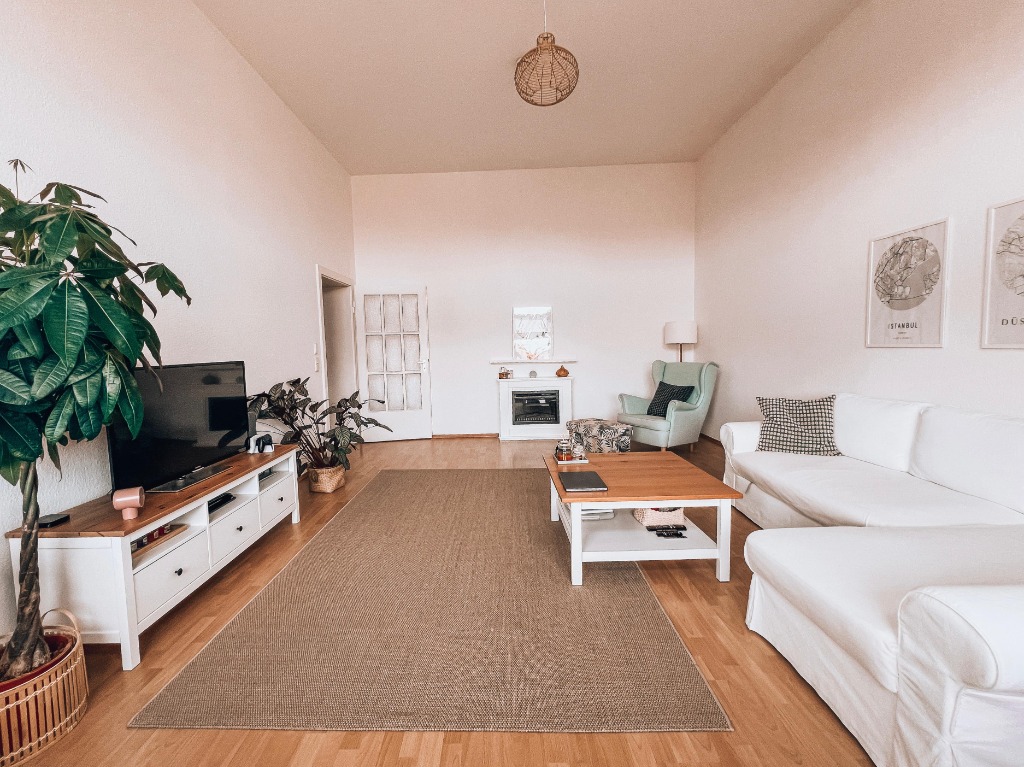
After moving from Turkey to Toronto and later continuing our life in Düsseldorf, we tried not to rebuild the same mountain of possessions we had worked so hard to reduce.
That doesn’t mean we stopped buying things.
And it definitely doesn’t mean I now live with only a few perfectly selected objects.
I still keep things that genuinely matter to me.
Some kitchen items came with us because I actually used them and missed them when they weren’t there.
I kept a few Paşabahçe glass pieces because they bring back good memories.
And many of the decorative elements I enjoy having around me today are houseplants.
For me, minimalist living gradually became less about the number of things I owned and more about why I owned them.
If something is useful, makes everyday life easier or genuinely makes me happy, I don’t feel guilty about keeping or buying it.
My Wardrobe Became Smaller — and Better
Clothes were another area where my habits changed.
Instead of constantly adding to the wardrobe, I became much more comfortable letting older pieces go when new ones came in.
My wardrobe became considerably smaller than it used to be, yet I didn’t feel as though I had less to wear.
Quite the opposite.
It became easier to see what I owned and easier to choose what to wear.
I also started enjoying the KonMari folding method, especially for drawers.
Folding clothes vertically instead of stacking them on top of one another means I can see almost everything at once.
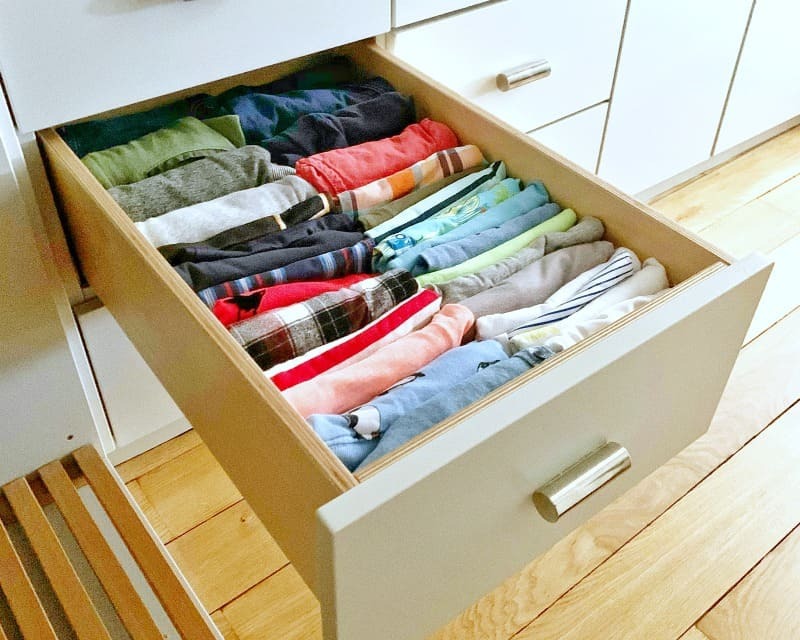
It sounds like a tiny organizational change, but it reduces the tendency to forget about clothes buried at the bottom of a drawer.
And that, in a way, is what minimalism is about: actually using and appreciating what you already have.
Minimalism Also Changed How I Spend Money
Perhaps the biggest long-term change was not how our home looked.
It was how I started thinking before buying something.
I became more aware of whether a purchase solved a real problem or simply created another possession to manage.
That naturally reduced unnecessary spending and made it easier to focus money on larger priorities.
But I don’t believe minimalism means refusing to spend money.
If something genuinely makes my life easier, saves time, solves a problem or brings lasting enjoyment, I am still perfectly happy to buy it.
The difference is that I now try to make that decision intentionally.
Minimalism, for me, is not about saying no to everything.
It is about understanding what deserves a yes.
What Minimalist Living Means to Me Today
Years after that first major decluttering experience, my understanding of minimalism is much simpler.
I don’t want the fewest possible possessions.
I want possessions that have a reason to be in my life.
Some are practical.
Some make daily routines easier.
Some remind me of people, places or experiences that matter to me.
And some simply make me happy when I see them.
Everything else is something I can reconsider.
Moving abroad forced me to make those decisions much faster than I otherwise would have. But in hindsight, that was probably a good thing.
Sometimes we become so used to the objects around us that we stop noticing how much physical and mental space they occupy.
Letting go of what I no longer needed created room for the things I actually valued.
And that is still the version of minimalist living that makes the most sense to me:
keep what is useful, meaningful or joyful — and feel comfortable saying goodbye to the rest.